This publication has been produced with the financial support of the Latvia-Russia Cross-Border Cooperation Programme 2014–2020. The contents of this publication are the sole responsibility of Balvi Municipality Council and can under no circumstances be regarded as reflecting the position of the Programme, the Programme member states Latvia and Russia, or the European Union.

European Cultural Heritage Days in Latvia, which this year were dedicated to the theme of transport, highlighted more than 80 sites across Latvia. They opened up a wide spectrum of heritage, ranging from roads, bridges, canals, and railway stations to airfields, lighthouses, and vintage vehicle collections.
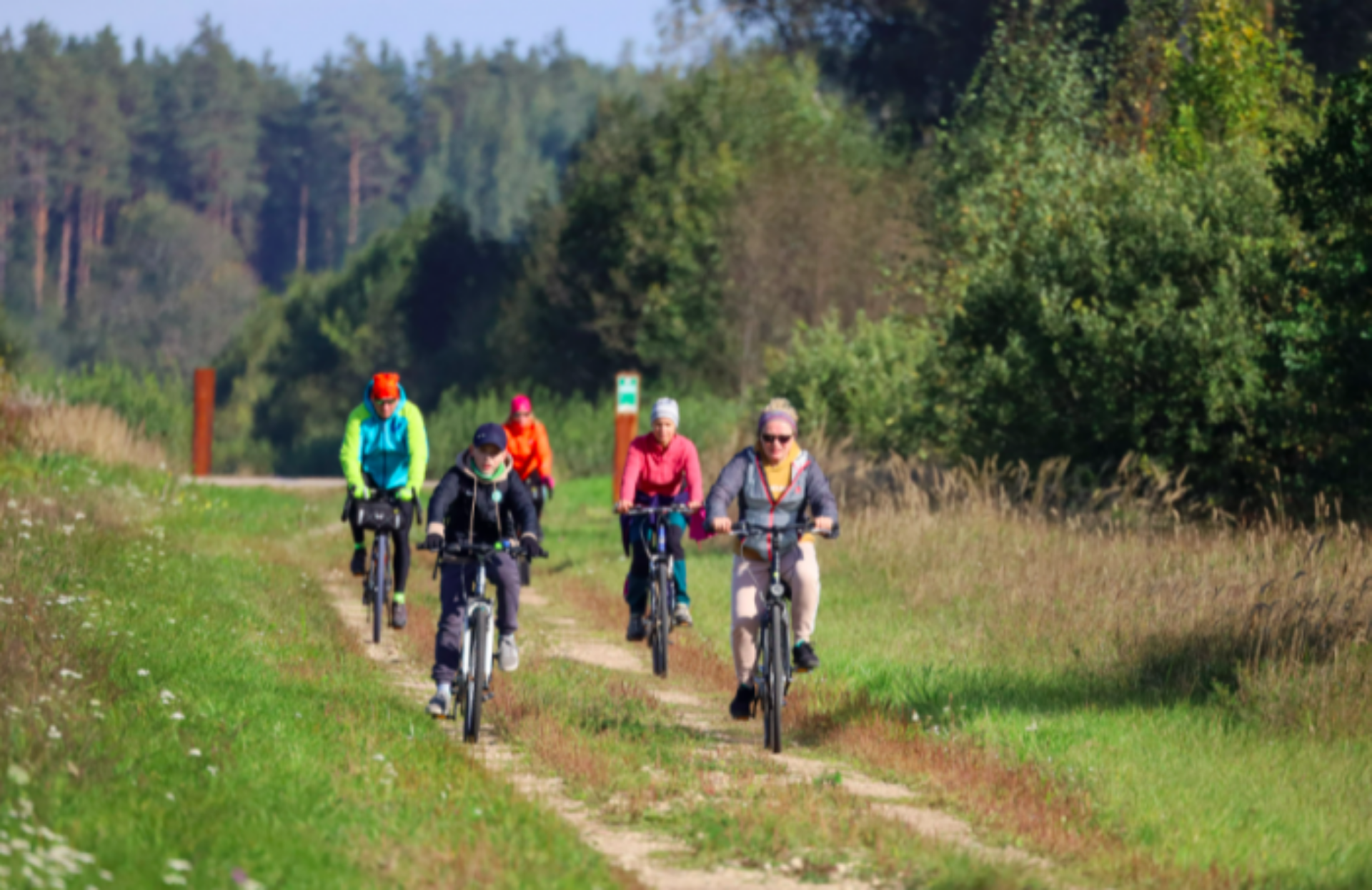
The Balvi and Gulbene municipality councils, in cooperation with the Vidzeme Tourism Association, also participated in the Heritage Days by organizing a joint two-day “Greenway Riga – Pskov” familiarization cycling trip from Viļaka to Gulbene.
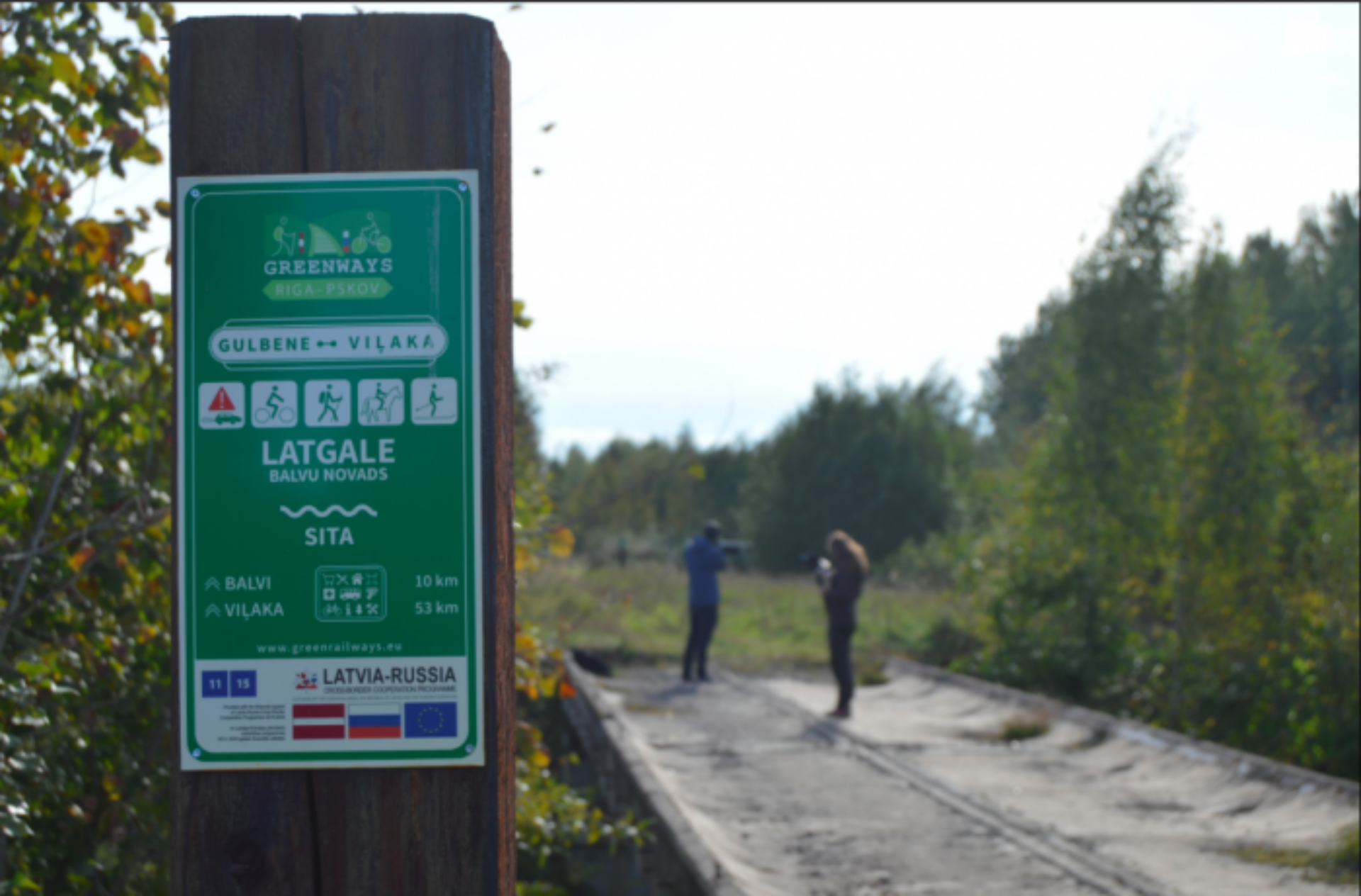
For two days, we set out to explore the greenways that follow the former railway route, which is currently being improved through project No. LV-RU-006 “GREENWAYS RIGA-PSKOV.” Green Railways is a network of greenways in Vidzeme and South Estonia, now also connected with Latgale and extending all the way to Pskov. It leads through picturesque landscapes and forests and is suitable for cycling, hiking, horseback riding, and skiing in winter conditions.
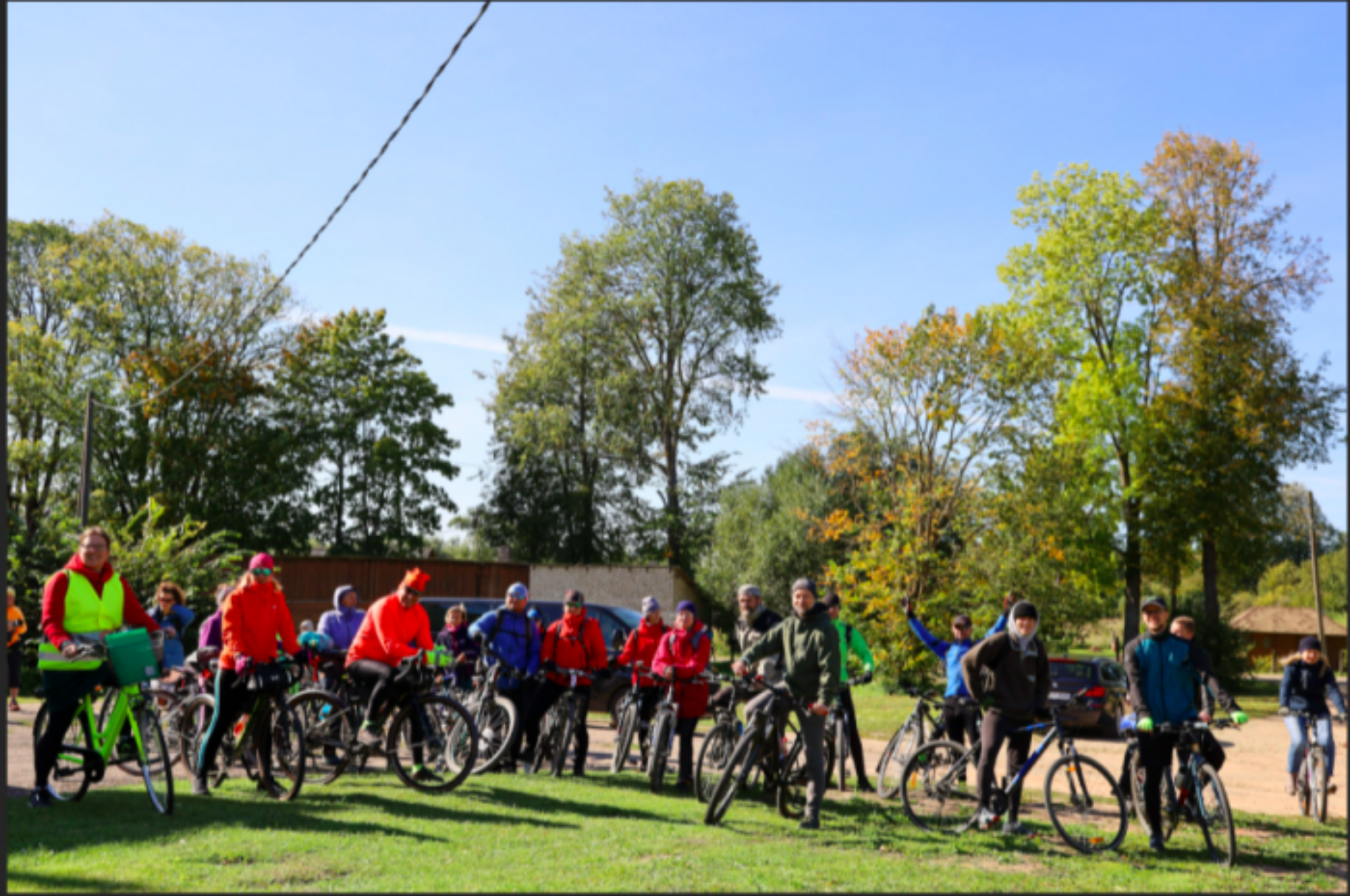
Thirty-eight cyclists applied for the two marketing events, traveling from as far as Tukums, Sigulda, and Riga. Some gathered at Gulbene station to travel together to the starting point at the Viļaka Museum. After individual registration, participants had the opportunity to view the modernized E. Spravņiks Latvian bird egg collection and the 5th-anniversary exhibition of the Valdis Bušs international painting plein air. Once all participants arrived, the event was opened by the President of the Latvian Greenways Association, Jānis Bordāns, and the Chairman of the Balvi Municipality Council, Sergejs Maksimovs, both of whom joined the cyclists. Meanwhile, Rita Gruševa, head of the Viļaka Museum, provided a brief insight into the development and significance of the railway during the former Marienhausen era. Each participant received reflective armbands with the Greenways logo. After a group photo and a starting call from Sergejs Maksimovs, the ride began.
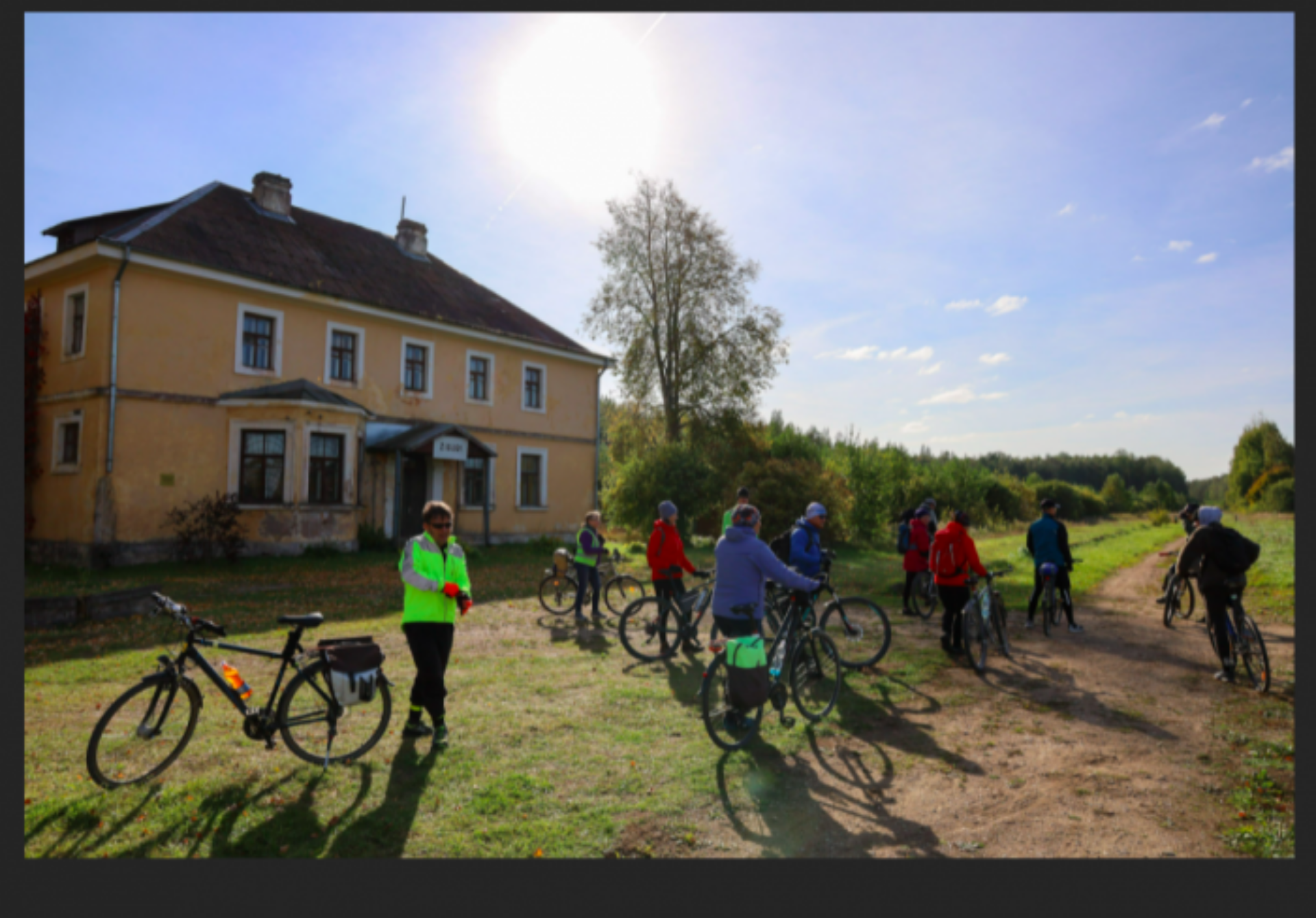
As many were in Viļaka for the first time, we took a short loop through the town to see the Viļaka Sacred Heart of Jesus Catholic Church and the Viļaka Lake promenade, before heading to the lunch spot at the Viļaka open-air stage. There, we were cheerfully greeted by the Viļaka Culture House team and a delicious lunch from Rekova Mill. After a short rest, we continued to the former Žīguri railway station, where we were welcomed with songs by the “Mežābele” ethnographic ensemble from the Žīguri Culture House and the “Forest Goods Village” (Meža labumu ciems) with pine cone syrup for a vitamin boost. After learning several interesting facts about Žīguri and the railway’s history, we continued along the green route to Kuprava. To sense the village’s former significance, we circled the former drainage pipe factory, where we were met by Latgale Regional Television at the Kuprava station. After giving interviews, we hurried toward Vīksna. In Vīksna, a warm dinner prepared by Dzidra Sērmūkša awaited us, and we immersed ourselves in local guide Ilgvars Bērziņš’s fascinating stories about life near the railway.
A total of 50 km was cycled on the first day, though the most eager cyclists managed to cover 70–100 km, riding the entire greenway route from Viļaka to Balvi and cycling all the way to their accommodations.
The cycling trip on September 19 began by gathering at the Balvi Municipality Museum. The most active participants individually toured the beautiful Balvi Manor Park and the Bear Garden (Lāču dārzs) and explored the interactive exhibitions of the Balvi Museum to start the second day’s adventure to Gulbene with a fresh charge of positive energy.
On the way to the Latvian Republic Army summer camp in Litene, we viewed the new rest area in Kubuli, stopped by the Sita River (the border between Latgale and Vidzeme), and visited the former railway bridge over the Pededze River. At the camp site, we were met by Jānis Zvaigzne, a former literature teacher, now a guide and author of the book “What is Litene?”. After a shared lunch, provided by “Kantes krogs,” we leisurely continued to Stāmeriena to explore the secrets of Stāmeriena Palace with guide Inga Lapse. Although the sun was hidden and we couldn’t see the glitter of the mountain crystals in the crosses of the Stāmeriena St. Alexander Nevsky Orthodox Church towers, it did not stop us from feeling the special aura of the church. Thanks to guide Gunārs Vīksniņš.
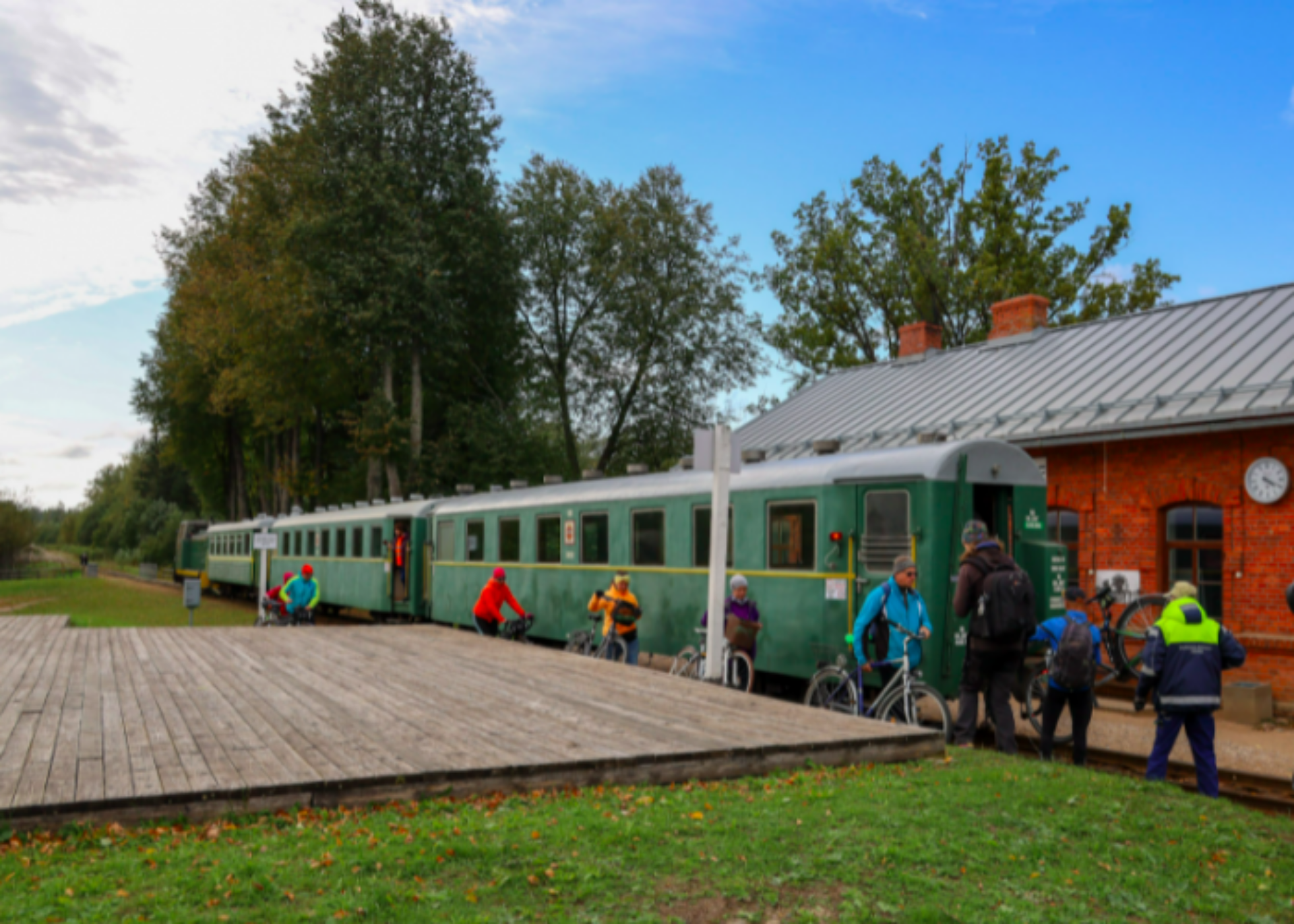
We continued the ride to the Stāmeriena narrow-gauge railway station. While waiting for the “Bānītis” (the Gulbene-Alūksne narrow-gauge train) to arrive, we toured the station grounds and climbed the observation tower. We then took the “Bānītis” to Gulbene, accompanied by lively conversation, where our joint two-day greenway cycling trip concluded.
In total, approximately 88 km were covered over the two days.
Special thanks to the Balvi Municipality Police, who escorted the cyclists on the Viļaka–Žīguri, Vīksna–Balvi, and Balvi–Kubuli road sections.
The participants agreed that the trip had its own “zest”—each section was different and unique, and the warm-hearted people met along the way combined with Latgalian hospitality did not disappoint.
The cycling trip was organized with the financial support of the Latvia-Russia Cross-Border Cooperation Programme 2014–2020. Participation was free of charge!
The Latvia-Russia Cross-Border Cooperation Programme 2014–2020 is co-financed by the European Union, the Republic of Latvia, and the Russian Federation.
The Latvia-Russia Cross-Border Cooperation Programme 2014–2020 provides financial support for joint cross-border development activities with the aim of improving the competitiveness of the regions by utilizing their potential and beneficial location at the crossroads between the European Union and the Russian Federation. The Programme website is www.latruscbc.eu.
Text: Inese Matisāne, Tourism Specialist at Viļaka Museum
Photos: Inese Matisāne and Jānis Sijāts